Friday, May 2, 2008

God's paradoxes and contradictions..


God seems to love to work by paradoxes and contradictions. In the transformations of grace, the bitter is the base of the sweet, night is the mother of day and death is the gate of life.

Many people want to have power. But how is power produced? The other day I passed the large powerhouse where the trolley engines are supplied with electricity. I heard the hum and roar of countless wheels, and i asked my friend, "How do they make the power?" "Why," he said, "just by the revolution of those wheels and the magnetic friction they produce. The friction creates the electric current."

In this same manner, when God wants to bring more power into our lives, He brings more pressure. He is generating spiritual force by friction. some of us do not like it. some of us do not understand. we try to run away from the pressure instead of getting the power and using it to rise above the painful cause.

A.B Simpson

Friday, February 15, 2008

All Things Beautiful: THE VICTORIAN CHILDREN ON CANVAS

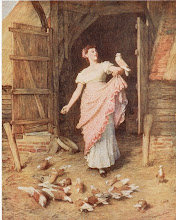
Pet Bird by William-Adolphe Bouguereau


Daisies by William-Adolphe Bouguereau


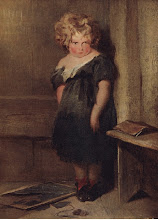
Compulsory Education By Charles Burton Barber


Childhood Idyll by William Adolphe Bouguereau


Pandora by John William Waterhouse


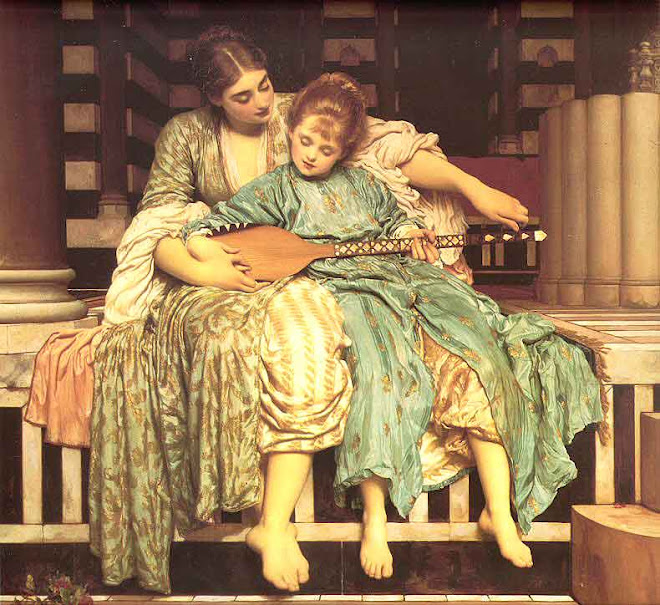
Music Lesson by Fredric Leighton


Sleeping Angel by Leon Jean Basile Penault


Little Beggars by William Adolphe Bouguereau


Cinderella by John Everett Millais


Bacchante by William-Adolphe Bouguereau


For the Squire by John Everett Millais


Ariel by John Anster Fitzgerald

Tuesday, February 12, 2008

Thursday, February 7, 2008

All Things Bright and Beautiful: Flowers

Water Lilies by Claude Monet


Sunflowers by Claude Monet


Study of Flowers by Fredrick Bazille


Spring Flowers by Claude Monet


Roses by Abbott Handerson Thayer


Petunia by Charles Renee MacIntosh


Lilacs, Marguerites and Anemones by Vincent van Gogh


Lilacs in a Window by Mary Cassatt


Irises by Vincent van Gogh


Geraniums by Childe Hassam


Garden in May by Maria Oakley Dewing


Fritillaries in a Copper Vase by Vincent van Gogh


Flowers by Fredrick Bazille


Chrysanthemums by Dennis Miller Bunker


Bouquet of flowers by Camille Pissaro


Source of Photos: Illusionsgallery.com

Sunday, January 27, 2008

All Things Wise and Beautiful : On the Artist...


The Artist co-operates with God in making increasingly larger numbers of people see the beauty of the world which these people could never see for themselves. The world, is of course, God's artistic masterpiece; but it is the artist who lends people eyes to see it with. Browning's Fra Lippo has the last word on the subject: -

For, don't you mark, we're made so that we love
First when we see them painted, things we have passed
Perhaps a hundred times not cared to see.


I
n this sense, Oscar Wilde's paradox is perfectly true: that Nature imitates Art; for the majority of men see in Nature what Art has taught them to see in Nature. The fogs of London, said Wilde, were the invention of Whistler.

To love beauty therefore becomes to the artist, as an artist, his first duty. To love beauty, that is, to see it for himself first, and then to communicate it to others ; for love implies at once vision and reproduction.

It must be the first article in an artist's creed, as an artist, that beauty is the best interpreter of God to man ; that; when he has got hold of beauty, he has got hold of the sures
t key to the knowledge of God.


Keats has said that Beauty is Truth. Now, this is not true. But to us here, Beauty is, as Plato said, the splendour of Truth. The artist, as an artist, must be content with the splendour and, through this splendour strive to convey the truth. He has no business with truth such as the philosopher, for instance has. He has no concern with conduct as such, as the moralist, for instance, has. It is not his function to exhort men to good work, or to prove things ; but merely to exhibit them.


Sources:
Ist photo: Hale, Lancashire by William Davis
2nd photo: Old Man from Warton Crag by Daniel Alexander Williamson
3rd photo: Landscape, Hampstead by John Everett Millais
4th photo: The Stonebreaker by John Brett

Saturday, January 26, 2008

All Things Bright and Beautiful: Texas Bluebonnets

One thing I love about Texas are the bluebonnets. It's so wonderful to spend a spring day by the hillside and watch the pretty array of bluebonnets all around...oh what a heavenly sight, what a heavenly feeling! Feast your eyes on this collection of bluebonnets photos courtesy of wildflowerhaven.com...

Monday, January 21, 2008

All Things Wise: The Seven Blunders of the World


The Seven Blunders of the World is a list that Mahatma Gandhi gave to his grandson Arun Gandhi, written on a piece of paper, on their final day together, not too long before his assassination. The seven blunders are:

  • Wealth without work
  • Pleasure without conscience
  • Knowledge without character
  • Commerce without morality
  • Science without humanity
  • Worship without sacrifice
  • Politics without principle

This list grew from Gandhi's search for the roots of violence. He called these acts of passive violence. Preventing these is the best way to prevent oneself or one's society from reaching a point of violence.

To this list, Arun Gandhi added an eighth blunder, Rights without responsibilities.